June 18, 2026
Waitlist Email Validation: Clean Product Launch Signups Before Announcement Day
A launch list is not a vanity number. It is a promise that your first announcement can reach real people. Validate signups before the list fills up, then bulk clean every CSV before launch day.
Executive Summary
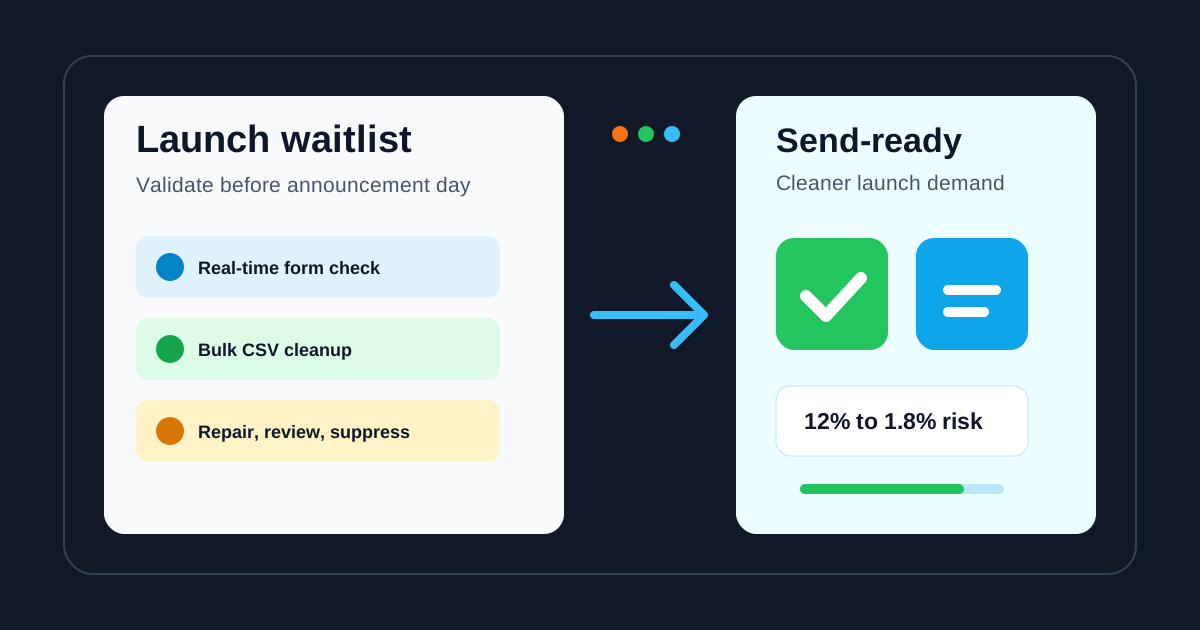
Waitlist email validation checks beta and launch signups before they become unreachable launch traffic. Use real-time validation on the form, then bulk validation before the announcement. The practical target: move a risky 12% signup pool toward 1.8% or less before you ask Gmail, Outlook, and Yahoo to trust the first big send.
What Is Waitlist Email Validation?
Waitlist email validation is the process of verifying launch, beta, early-access, and referral-loop emails before the product announcement goes out. It checks whether the address is formatted correctly, whether the domain can receive mail, whether the mailbox is reachable through SMTP verification, and whether the record carries risk signals such as disposable domains, role accounts, new domains, or common typos.
The point is simple: your waitlist should measure reachable demand, not just form submissions. A 20,000 person list with 12% invalid or risky records is not stronger than a 17,600 person list that has been cleaned, repaired, and routed. The cleaned list costs less to send, creates fewer bounces, and gives the launch team a clearer view of real demand.
Email-Check.app follows the validation workflow launch teams need: RFC 5322 syntax validation, DNS and MX verification, SMTP verification without sending, disposable email detection, typo correction, role-based email detection, name extraction, and risk scoring.
Why Product Launch Waitlists Collect Bad Data
Waitlists attract messy data because the incentive is high and the friction is low. People join from mobile keyboards, referral contests, paid social ads, community posts, and product-launch directories. Some are serious buyers. Some are curious. Some use temporary inboxes to claim access without sharing a durable identity. Bots and low-quality submissions can also inflate the count.
This pattern is showing up across the launch tooling market. A 2026 launch tooling guide recommends signup-time spam protection for waitlists because list hygiene affects sender reputation before the first announcement email is sent. A 2026 disposable-email report also frames temporary inbox growth as a structural issue for signup forms. Those sources point in the same direction: protect the capture point, then re-check the list before send time.
Mailbox providers reinforce the same lesson. Gmail asks senders to keep spam rates low, authenticate mail, format messages according to RFC 5322, and monitor bounces and reputation. Yahoo recommends removing invalid recipients promptly. Microsoft tells high-volume Outlook senders to maintain list hygiene and remove invalid addresses to reduce bounces and wasted messages. Authentication matters, but it does not turn bad addresses into reachable subscribers.
Real-Time Validation vs Bulk Waitlist Cleaning
The strongest launch workflow uses both real-time validation and bulk validation. Real-time checks protect the source of truth. Bulk cleaning protects the announcement. The gap matters because launch lists often sit for months while people change jobs, temporary inboxes expire, and typoed addresses remain hidden in CRM.
| Validation pattern | Best for | Launch value |
|---|---|---|
| Real-time validation | Landing pages, referral loops, beta signup forms, invite requests | Stops bad records before they inflate the launch list. |
| Bulk CSV validation | Old waitlists, imported event lists, partner files, product hunt exports | Cleans stale addresses before the launch announcement goes out. |
| Scheduled refresh | Long pre-launch cycles, private betas, rolling access programs | Catches decay between signup and launch day. |
API Integration for Launch Forms
The live waitlist form should validate before saving the record. Do not block every uncertain address. Use local policy. Prompt clear typos, suppress confirmed disposable and unreachable addresses, review catch-all records, and accept high-confidence contacts.
curl -G "https://api.email-check.app/v1-get-email-details" \
  -H "accept: application/json" \
  -H "x-api-key: YOUR_API_KEY" \
  --data-urlencode "email=founder@gmial.com" \
  --data-urlencode "verifyMx=true" \
  --data-urlencode "verifySmtp=true" \
  --data-urlencode "suggestDomain=true" \
  --data-urlencode "detectName=true" \
  --data-urlencode "checkDomainAge=true" \
  --data-urlencode "timeout=8000"
type WaitlistValidationResult = {
email: string;
validFormat: boolean;
validMx: boolean | null;
validSmtp: boolean | null;
isDisposable: boolean;
isFree?: boolean;
isRoleBased?: boolean;
score?: number;
domainSuggestion?: { suggested?: string | null; confidence?: number | null } | null;
};
type WaitlistRoute = "accept" | "prompt_fix" | "review" | "suppress";
export function routeWaitlistSignup(result: WaitlistValidationResult): WaitlistRoute {
if (!result.validFormat || (result.domainSuggestion?.confidence ?? 0) >= 0.8) {
return "prompt_fix";
}
if (!result.validMx || result.isDisposable || result.validSmtp === false) {
return "suppress";
}
if (result.isRoleBased || (result.score ?? 0) < 72) {
return "review";
}
return "accept";
}
export async function validateWaitlistSignup(email: string) {
const params = new URLSearchParams({
email,
verifyMx: "true",
verifySmtp: "true",
suggestDomain: "true",
detectName: "true",
checkDomainAge: "true",
});
const response = await fetch("https://api.email-check.app/v1-get-email-details?" + params, {
headers: {
accept: "application/json",
"x-api-key": process.env.EMAIL_CHECK_API_KEY ?? "",
},
});
if (!response.ok) {
throw new Error("Waitlist email validation failed");
}
const result = (await response.json()) as WaitlistValidationResult;
return { result, route: routeWaitlistSignup(result) };
}Bulk Clean the Waitlist Before the Launch Send
Before launch day, export every source that feeds the announcement: waitlist app, referral system, CRM, early-access spreadsheet, paid lead form, and partner file. Upload multiple CSV files through bulk validation, download the results, and keep invalid, disposable, typoed, and low-score records out of the send-ready segment.
import csv
import requests

API_KEY = "YOUR_API_KEY"
INPUT_FILE = "launch-waitlist.csv"
OUTPUT_FILE = "launch-waitlist-validated.csv"

def validate(email: str) -> dict:
    response = requests.get(
        "https://api.email-check.app/v1-get-email-details",
        headers={"accept": "application/json", "x-api-key": API_KEY},
        params={
            "email": email,
            "verifyMx": "true",
            "verifySmtp": "true",
            "suggestDomain": "true",
            "detectName": "true",
            "checkDomainAge": "true",
        },
        timeout=10,
    )
    response.raise_for_status()
    return response.json()

def route(result: dict) -> str:
    if not result.get("validFormat") or result.get("domainSuggestion"):
        return "repair"
    if not result.get("validMx") or result.get("isDisposable") or result.get("validSmtp") is False:
        return "suppress"
    if result.get("isRoleBased") or result.get("score", 0) < 72:
        return "review"
    return "send_ready"

with open(INPUT_FILE, newline="") as source, open(OUTPUT_FILE, "w", newline="") as target:
    reader = csv.DictReader(source)
    fields = [*reader.fieldnames, "email_route", "email_score", "smtp_valid", "suggested_domain"]
    writer = csv.DictWriter(target, fieldnames=fields)
    writer.writeheader()

    for row in reader:
        result = validate(row["email"])
        suggestion = result.get("domainSuggestion") or {}
        writer.writerow({
            **row,
            "email_route": route(result),
            "email_score": result.get("score", 0),
            "smtp_valid": result.get("validSmtp"),
            "suggested_domain": suggestion.get("suggested"),
        })
Route Every Signup by Risk
A useful waitlist workflow does not create a binary good or bad label. It creates operational routes. That lets growth teams recover typoed leads while protecting sender reputation from confirmed bad records.
| Route | Validation criteria | Action |
|---|---|---|
| Send-ready | Valid format, MX present, SMTP reachable or high confidence, no disposable signal, score 72 or higher. | Add to the launch segment and send product announcements, onboarding, and founder updates. |
| Prompt fix | Common typo such as gmial.com, yaho.com, hotmial.com, or missing domain characters. | Show the suggested correction before saving the signup, then validate the corrected address again. |
| Review | Catch-all domain, role account, uncertain SMTP response, or low confidence score. | Keep the record out of high-volume launch sends until marketing ops approves the segment. |
| Suppress | Malformed address, no MX, disposable domain, confirmed unreachable mailbox, or high-risk pattern. | Exclude from launch sends and store the reason for source-quality reporting. |
Waitlist ROI: Cleaner Launch Data Changes the First Send
Suppose a startup collects 50,000 waitlist signups across a landing page, referral loop, and launch partner. If 12% of those records are invalid, disposable, typoed, or risky, the first announcement begins with 6,000 potential problems. Validation does not only reduce send waste. It improves the first trust signal mailbox providers see from the launch domain.
| Metric | Before validation | After validation |
|---|---|---|
| Launch waitlist size | 50,000 records | 44,100 send-ready |
| Invalid or risky share | 12% | 1.8% |
| Launch deliverability | 73% | 96% |
| Recoverable typos | Lost leads | Up to 7% repaired |
| Operational move | Send to everyone | Repair, review, suppress, then send |
How to Reduce Launch Bounce Rate Below 2%
- Validate every new signup in real time before saving it to the waitlist.
- Show a correction prompt for common typos such as gmial.com, yaho.com, and hotmial.com.
- Suppress disposable domains and confirmed unreachable mailboxes from the launch send.
- Hold catch-all, role-based, and low-score records for review instead of sending at full volume.
- Bulk clean all CSV exports again within seven days of the launch announcement.
- Warm the send with engaged, high-confidence contacts before expanding to review segments.
Where This Fits in Email-Check.app
Start with the email validation API guide to understand the signal model. Use bulk data cleansing for old waitlist CSVs, the bounce-rate reduction guide for launch deliverability, and the API reference when you are ready to wire validation into the form. The related gated form validation guide covers demo and content forms after launch.
FAQ
What is the best time to validate a launch waitlist?
Validate at signup and again before launch day. Signup-time validation keeps bad records out. Bulk validation catches list decay, expired temporary inboxes, and old imports before the announcement send.
Can validation recover lost launch leads?
Yes. Typo correction can recover leads that would otherwise bounce because of misspelled domains. For a launch list, even a few percentage points of recovered addresses can change early activation numbers.
Does email validation replace double opt-in?
No. Validation confirms address quality. Double opt-in confirms intent. The strongest launch workflow uses validation first, then consent and engagement signals before high-volume sends.
Clean the waitlist before the launch email
Use Email-Check.app to validate signups in real time, upload launch CSVs in bulk, and export send-ready segments without invalid, disposable, or unreachable emails.
Sources reviewed for 2026 search and deliverability context: LaunchList product launch tooling, Verified.email disposable email trends, Gmail sender guidelines, Yahoo sender best practices, and Microsoft Outlook high-volume sender requirements.