May 21, 2026
Gated Content Email Validation: Stop Fake Demo and Download Leads in 2026
Demo requests, webinar signups, pricing forms, and content downloads are only useful when sales can reach the person behind the email. Validate the address before fake leads become pipeline.
Executive Summary
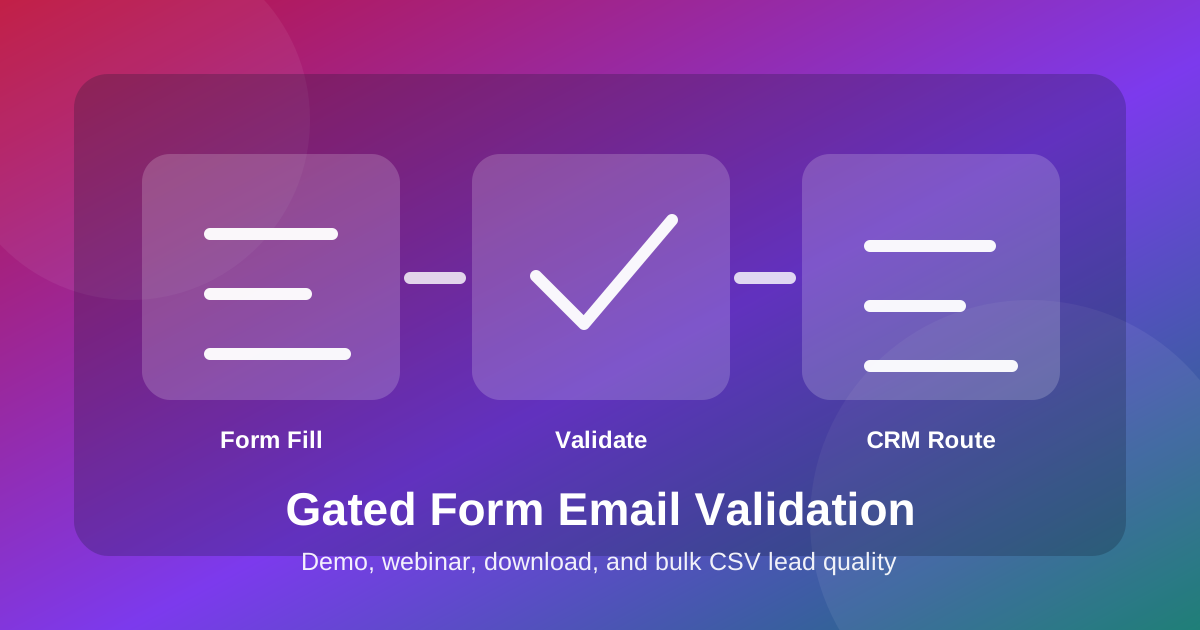
Gated forms need validation rules that match intent. A newsletter form can ask for a correction. A demo, pricing, trial, or order form should be stricter because the email can trigger sales work, product access, support cost, or sender reputation risk. Use real-time validation on form submit, store validation signals in CRM, and bulk clean historical CSV files before campaigns or rep assignment.
What Is Gated Content Email Validation?
Gated content email validation checks the email address on a demo, asset, webinar, waitlist, pricing, or quote form before the lead enters CRM or marketing automation. It is not the same as a required email confirmation link. Validation answers whether the address is formatted correctly, the domain can receive mail, the mailbox appears reachable, the domain is disposable, and the value contains a common typo.
The use case is practical. A growth team spends budget to drive traffic to a webinar landing page. A bot, competitor, student, or low-intent visitor submits a temporary inbox. Without validation, that row enters HubSpot or Salesforce, triggers lead scoring, creates a sales task, joins a nurture sequence, and gets counted in campaign ROI. The contact was never reachable, but it still changed the numbers.
Why Fake Demo and Download Leads Cost Money
Fake leads do not only waste sales time. They make good channels look worse and bad channels look better. Invalid addresses inflate cost per lead, lower meeting-booked rate, trigger unnecessary enrichment spend, and push unreachable contacts into marketing campaigns. If 50,000 monthly form fills contain 12% invalid or fake emails, the team is routing 6,000 records that cannot produce revenue. If validation reduces that pool near 1.8%, the waste drops to 900 records before reps, campaign tools, and mailbox providers absorb the cost.
Deliverability is the second-order damage. Google tells bulk senders to keep user-reported spam rates below 0.1% and avoid reaching 0.3% or higher. Yahoo also points senders toward high-quality practices. Validation does not replace consent or relevant messaging, but it removes bad recipient data before it becomes a bounce, complaint, or cold sales task.
The Validation Workflow for Lead Forms
Email-Check.app uses a layered workflow: RFC-style syntax validation, DNS and MX verification, SMTP mailbox verification without sending email, disposable email detection, typo detection, name extraction, free-provider detection, domain-age checks, and risk scoring. For lead generation, the most important piece is the routing policy. A valid result should not only be a green check. It should tell the system what to do next.
Form
Validate
Correct
Score
Route
Sync
Real-Time Validation Policy by Form Type
| Form Type | Risk | Validation Policy |
|---|---|---|
| Newsletter signup | Low direct cost, medium sender risk | Prompt typos, review disposable addresses, suppress obvious invalids. |
| Content download | Attribution and nurture pollution | Allow high-confidence emails, repair typos, route risky records to low-priority nurture. |
| Webinar registration | Sales follow-up and attendance reporting | Block disposable domains and tag role-based or SMTP-unknown records for review. |
| Demo or pricing request | High sales cost and pipeline distortion | Require deliverability confidence before rep assignment. Review uncertain B2B records. |
| Trial or account creation | Abuse, infrastructure cost, fake account creation | Block disposable, invalid, and no-MX addresses before account activation. |
Implementation Example: Route Leads by Intent
The route should change based on the value behind the form. A low-risk download can accept more uncertainty than a demo request. A trial form should be stricter than a newsletter form because it can create product cost and abuse exposure.
type ValidationResult = {
  validFormat: boolean;
  validMx: boolean | null;
  validSmtp: boolean | null;
  isDisposable: boolean;
  isFree: boolean;
  score?: number;
  domainSuggestion?: { suggested?: string | null } | null;
};

type LeadIntent = "newsletter" | "download" | "webinar" | "demo" | "pricing";
type LeadRoute = "accept" | "prompt_fix" | "review" | "block";

export function routeLead(intent: LeadIntent, result: ValidationResult): LeadRoute {
  if (!result.validFormat || result.domainSuggestion?.suggested) {
    return "prompt_fix";
  }

  if (!result.validMx || result.isDisposable) {
    return intent === "newsletter" ? "review" : "block";
  }

  if (!result.validSmtp || (result.score ?? 0) < 70) {
    return intent === "demo" || intent === "pricing" ? "review" : "accept";
  }

  return "accept";
}
API Call Example for Real-Time Forms
Run this call server-side so the API key stays private. Return only the decision and safe correction message to the browser. Store the full validation result in CRM or your lead-event table for routing and reporting.
async function validateLeadEmail(email: string) {
  const params = new URLSearchParams({
    email,
    verifyMx: "true",
    verifySmtp: "true",
    suggestDomain: "true",
    detectName: "true",
    checkDomainAge: "true",
  });

  const response = await fetch("https://api.email-check.app/v1-get-email-details?" + params, {
    headers: {
      accept: "application/json",
      "x-api-key": process.env.EMAIL_CHECK_API_KEY ?? "",
    },
  });

  if (!response.ok) {
    throw new Error("Email validation failed");
  }

  return response.json();
}
CRM Fields to Store From Email Validation
Good lead validation does not end at the form. Write the signals into CRM so sales and marketing can filter, score, and report on reachable leads. Keep the raw email handling aligned with your privacy policy, but do not throw away the validation metadata that explains the routing decision.
| Field | Why It Matters | Example Use |
|---|---|---|
| email_validation_score | Ranks confidence across syntax, MX, SMTP, and risk signals. | Prioritize demo requests above 80. |
| email_is_disposable | Flags temporary inboxes used for fake signups or low-intent submissions. | Suppress from sales routing and paid nurture. |
| email_valid_smtp | Shows whether the mailbox appears reachable without sending. | Review unknown results before outbound sequencing. |
| email_domain_suggestion | Recovers lost leads from typos. | Prompt the visitor to confirm gmail.com instead of gmial.com. |
| email_validated_at | Prevents stale validation from being treated as current. | Revalidate old leads before reactivation campaigns. |
Bulk Upload: Clean Old Demo, Webinar, and Partner CSVs
Real-time validation protects future forms. Bulk validation fixes the data you already collected. This is where multi-file CSV upload matters: one event list, one paid partner file, one webinar export, and one demo request archive can all carry different risk rates. Clean them before merging, assigning reps, or launching a nurture campaign.
The output should let the team download data without invalid and unreachable emails. Keep separate files for send-ready, repair, review, and suppress records. This makes marketing operations faster because nobody has to argue with a single yes-or-no field after the import.
import csv
import requests

API_KEY = "YOUR_API_KEY"
FILES = ["webinar-leads.csv", "demo-requests.csv", "partner-leads.csv"]

def validate(email: str) -> dict:
    response = requests.get(
        "https://api.email-check.app/v1-get-email-details",
        headers={"accept": "application/json", "x-api-key": API_KEY},
        params={
            "email": email,
            "verifyMx": "true",
            "verifySmtp": "true",
            "suggestDomain": "true",
            "detectName": "true",
            "checkDomainAge": "true",
        },
        timeout=10,
    )
    response.raise_for_status()
    return response.json()

for file_name in FILES:
    with open(file_name, newline="") as source, open(file_name.replace(".csv", "-clean.csv"), "w", newline="") as target:
        reader = csv.DictReader(source)
        fieldnames = [*reader.fieldnames, "email_route", "email_score", "is_disposable", "smtp_status"]
        writer = csv.DictWriter(target, fieldnames=fieldnames)
        writer.writeheader()

        for row in reader:
            result = validate(row["email"])
            route = "send_ready"
            if result.get("domainSuggestion"):
                route = "repair"
            elif result.get("isDisposable") or not result.get("validMx"):
                route = "suppress"
            elif not result.get("validSmtp") or result.get("score", 0) < 70:
                route = "review"

            writer.writerow({
                **row,
                "email_route": route,
                "email_score": result.get("score", 0),
                "is_disposable": result.get("isDisposable", False),
                "smtp_status": result.get("validSmtp"),
            })
ROI Model for Gated Form Validation
A simple model is enough for planning. Take monthly form fills, multiply by the invalid or fake rate, then multiply by the blended cost of enrichment, rep review, CRM storage, and campaign sends. A team receiving 80,000 monthly form fills with a 10% bad-email rate has 8,000 bad records entering the system. At $5 in blended waste per bad lead, that is $40,000 a month. If validation cuts fake or invalid records by 87%, the recovered operating room is meaningful even before deliverability gains are counted.
The bigger win is cleaner decisions. Paid search looks more efficient when fake downloads are excluded. Webinars get measured by reachable registrants instead of raw rows. Sales accepts marketing qualified leads with fewer dead ends. Lifecycle teams send to segments that have a better chance of reaching an inbox.
Where to Connect This Workflow
Start with the live email validation demo and the API reference. For deeper planning, pair this post with disposable email detection, bounce-rate reduction, and email validator npm versus API. If you are cleaning existing files, use the account bulk checker to upload CSVs and download cleaned validation results before the next campaign.
FAQ
Should content downloads block all disposable emails?
Usually no for low-risk assets, yes for high-intent workflows. A disposable address on a newsletter form can be reviewed or placed in a low-priority segment. A disposable address on a demo, pricing, trial, or order form should be blocked or challenged.
Does validation hurt conversion?
Poorly timed validation can. Use instant syntax feedback, clear correction prompts, and server-side API checks at submit. Recovering typos often improves conversion because visitors can fix the address before the form fails silently.
How often should older lead lists be cleaned?
Clean before every major campaign or CRM import, and revalidate older lead pools when the data is more than 60 to 90 days old. Job changes, domain shutdowns, and abandoned inboxes can turn a once-valid record into a bounce risk.