June 18, 2026
Contest Email Validation: Stop Giveaway Fraud Before It Hits CRM
Giveaway campaigns can bring real buyers into your funnel, but they also attract temporary inboxes, duplicate identities, and unreachable leads. Validate every entry before fraud drains prizes, ad spend, and sender reputation.
Executive Summary
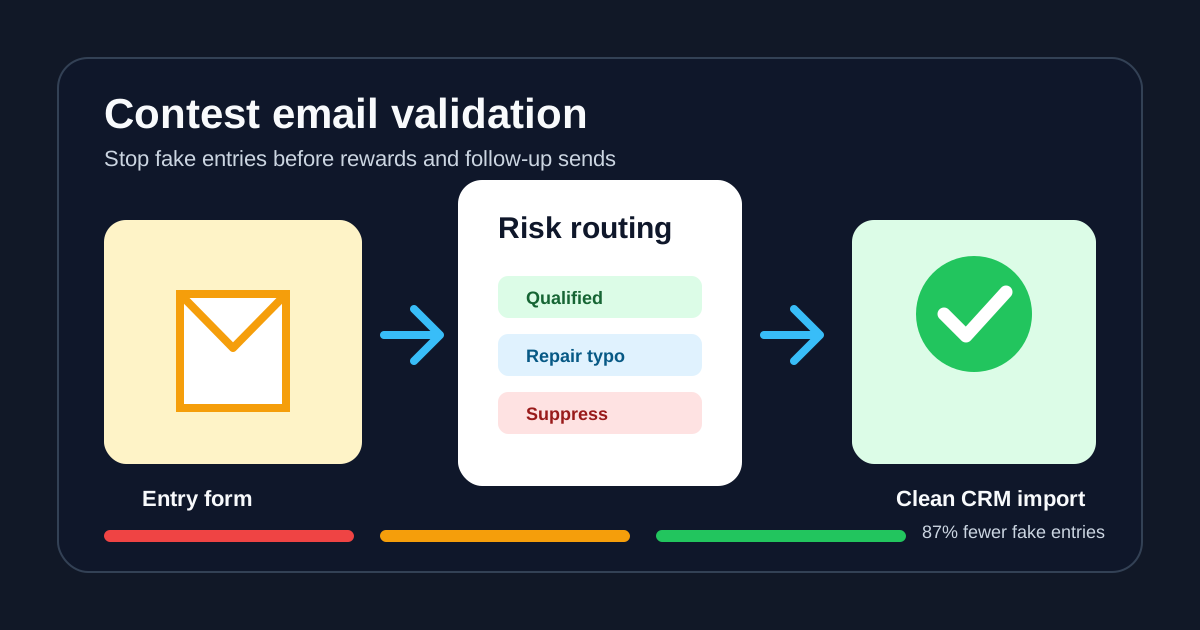
Contest email validation protects giveaways, referral programs, coupon campaigns, and co-marketing lists from fake entries. The workflow is practical: validate at entry time, block disposable or unreachable emails, route risky records for review, and bulk clean the final CSV before winner selection or follow-up.
What Is Contest Email Validation?
Contest email validation is the process of checking giveaway, sweepstakes, referral, and promotional-entry emails before they count as qualified leads. It confirms the address format, domain, MX records, SMTP mailbox reachability, disposable status, typo signals, role-account status, domain age, and overall risk score.
The goal is not to make forms hostile. The goal is to keep a prize-driven campaign honest. A real buyer who mistypes gmail.com as gmial.com should get a correction prompt. A temporary inbox with no long-term reach should not receive a coupon, referral credit, or winner notification. A catch-all corporate address might deserve review instead of an automatic block.
Email-Check.app supports both sides of the campaign: real-time validation for the entry form and bulk validation for campaign exports from ads, partners, field teams, and CRM.
Why Giveaways Attract Fake Entries in 2026
Giveaways create an obvious incentive: submit more entries, claim more rewards, and avoid long-term contact. Disposable email services make that cheap. Cloudflare described disposable email checks as a control for promotion abuse and fake account creation. Recent disposable-email reporting also shows temporary inboxes becoming a larger part of online form abuse, not a fringe edge case.
This is where basic regex validation fails. A temporary email can have perfect syntax. It can even receive a confirmation message for a few minutes. The risk comes later, when the inbox expires, the campaign sends a follow-up, and the bounce or non-engagement damages performance. Marketing teams pay for the lead, the ESP charges to store or send to it, sales wastes time, and sender reputation absorbs the signal.
Mailbox providers already expect list discipline. Gmail requires low spam rates and valid message formatting. Yahoo tells senders to remove invalid recipients promptly. Microsoft recommends list hygiene and bounce management for high-volume Outlook senders. A contest list should meet that standard before it enters the main marketing database.
How to Reduce Fake Contest Entries
- Validate the email before confirming the entry.
- Reject disposable domains for prize, coupon, and referral campaigns.
- Prompt typo corrections instead of silently losing real entrants.
- Review catch-all, new-domain, low-score, and role-based entries before rewards are issued.
- Bulk clean all CSV exports before winner selection and nurture imports.
- Track disposable share, invalid share, bounce rate, and duplicate-entry patterns by traffic source.
Validation Rules by Campaign Type
| Campaign | Common risk | Validation move |
|---|---|---|
| Giveaway landing page | Temporary inboxes and repeated entries inflate lead count. | Block disposable and unreachable emails before entry confirmation. |
| Referral program | Self-referrals and low-quality domains drain rewards. | Score every referred email and hold low-confidence records for review. |
| Coupon capture | One person claims the same promotion with disposable identities. | Combine disposable detection, domain age, and CRM dedupe before issuing the code. |
| Partner co-marketing | Imported CSVs mix real leads with stale or scraped addresses. | Bulk clean files before CRM import and nurture sequences. |
API Examples for Contest Protection
The API call is the same whether the entry came from a landing page, referral widget, or partner form. The policy is what changes. Expensive reward campaigns should be stricter than a low-risk newsletter signup.
curl -G "https://api.email-check.app/v1-get-email-details" \
  -H "accept: application/json" \
  -H "x-api-key: YOUR_API_KEY" \
  --data-urlencode "email=winner@tempmail.example" \
  --data-urlencode "verifyMx=true" \
  --data-urlencode "verifySmtp=true" \
  --data-urlencode "suggestDomain=true" \
  --data-urlencode "detectName=true" \
  --data-urlencode "checkDomainAge=true"
type EntryIntent = "newsletter" | "coupon" | "giveaway" | "referral" | "partner_campaign";
type ContestValidationResult = {
validFormat: boolean;
validMx: boolean | null;
validSmtp: boolean | null;
isDisposable: boolean;
isFree?: boolean;
isRoleBased?: boolean;
score?: number;
domainSuggestion?: { suggested?: string | null; confidence?: number | null } | null;
};
type EntryDecision = "accept" | "prompt_fix" | "review" | "block";
export function decideContestEntry(intent: EntryIntent, result: ContestValidationResult): EntryDecision {
if (!result.validFormat || (result.domainSuggestion?.confidence ?? 0) >= 0.8) {
return "prompt_fix";
}
if (!result.validMx || result.validSmtp === false || result.isDisposable) {
return intent === "newsletter" ? "review" : "block";
}
if (result.isRoleBased || (result.score ?? 0) < 75) {
return intent === "giveaway" || intent === "referral" ? "review" : "accept";
}
return "accept";
}Bulk Clean the Entry CSV Before Winner Selection
Fraud does not always arrive through your own form. Partner lists, influencer files, co-marketing exports, event scans, and ad-platform downloads often arrive as CSVs. Upload those files for bulk validation before winner selection, CRM import, or campaign follow-up.
import csv
import requests

API_KEY = "YOUR_API_KEY"
SOURCE_FILE = "giveaway-entries.csv"
TARGET_FILE = "giveaway-entries-clean.csv"

def validate(email: str) -> dict:
    response = requests.get(
        "https://api.email-check.app/v1-get-email-details",
        headers={"accept": "application/json", "x-api-key": API_KEY},
        params={
            "email": email,
            "verifyMx": "true",
            "verifySmtp": "true",
            "suggestDomain": "true",
            "detectName": "true",
            "checkDomainAge": "true",
        },
        timeout=10,
    )
    response.raise_for_status()
    return response.json()

def entry_route(result: dict) -> str:
    if result.get("domainSuggestion") or not result.get("validFormat"):
        return "repair"
    if result.get("isDisposable") or not result.get("validMx") or result.get("validSmtp") is False:
        return "suppress"
    if result.get("isRoleBased") or result.get("score", 0) < 75:
        return "manual_review"
    return "qualified"

with open(SOURCE_FILE, newline="") as source, open(TARGET_FILE, "w", newline="") as target:
    reader = csv.DictReader(source)
    fields = [*reader.fieldnames, "entry_route", "email_score", "is_disposable", "smtp_valid"]
    writer = csv.DictWriter(target, fieldnames=fields)
    writer.writeheader()

    for row in reader:
        result = validate(row["email"])
        writer.writerow({
            **row,
            "entry_route": entry_route(result),
            "email_score": result.get("score", 0),
            "is_disposable": result.get("isDisposable", False),
            "smtp_valid": result.get("validSmtp"),
        })
Valid vs Invalid Contest Entry Types
Treat validation as a routing system, not only a rejection system. This keeps the form fair for real people while still stopping disposable inboxes and unreachable addresses.
| Entry type | Validation signal | Recommended move |
|---|---|---|
| Qualified entrant | Valid format, MX present, SMTP reachable, no disposable signal, score 75 or higher. | Accept entry and sync to CRM or campaign automation. |
| Typo repair | High-confidence correction such as gmial.com to gmail.com or yaho.com to yahoo.com. | Prompt the entrant to confirm the corrected address before entry confirmation. |
| Manual review | Catch-all domain, role address, low score, suspicious new domain, or repeated prize behavior. | Hold entry until campaign operations reviews the record and source. |
| Suppression | Disposable domain, no MX, confirmed unreachable mailbox, malformed syntax, or duplicate abuse pattern. | Exclude from winner selection and follow-up sends. |
ROI: Stop Paying for Unreachable Contest Leads
A giveaway with 80,000 entries can look like a growth win until the follow-up campaign starts bouncing. If 12% of entries are disposable, unreachable, typoed, or risky, the campaign carries 9,600 records that can waste send budget and skew reporting. Validation lets the team repair real typos, suppress confirmed bad entries, and reserve manual review for edge cases.
| Metric | Before validation | After validation |
|---|---|---|
| Contest entries | 80,000 raw | 66,400 qualified |
| Disposable or unreachable share | 12% | 1.8% |
| Fraud and waste reduction | Manual review after campaign | Up to 87% fewer fake entries |
| Prize and ad budget | $40K monthly exposure | Spend focused on reachable leads |
| Follow-up deliverability | 73% | 96% |
Contest Leads Can Hurt Sender Reputation
Contest leads often receive the same nurture and promotional sends as normal subscribers. That is risky when the entry source has poor data quality. Invalid addresses create hard bounces. Temporary inboxes decay quickly. Low-intent entrants may ignore or complain. The result is not only wasted budget. It is weaker sender reputation for the campaigns that follow.
Keep the contest segment separate until it proves quality. Send only to validated contacts first. Compare bounce rate, opens, clicks, unsubscribe behavior, and complaints against your normal acquisition channels. If the segment performs poorly, keep it out of your primary sender pool.
Where This Fits in Email-Check.app
Use the disposable email detection guide for temporary inbox policy, the reduce bounce rate guide for deliverability recovery, the fraud prevention use case for fake account controls, and the API reference for implementation details. For broader form protection, read the lead form spam and risk scoring guide.
FAQ
What is the first validation rule for a giveaway form?
Start by blocking malformed, disposable, no-MX, and confirmed unreachable emails. Then route typos to repair and risky but plausible records to manual review.
Can contest validation reduce bounce rate?
Yes. Removing invalid and unreachable entries before follow-up campaigns reduces hard bounces and helps keep sender reputation stable. The same workflow also lowers storage and send costs for low-quality contacts.
Should free-mail domains be blocked from contests?
Not automatically. A Gmail or Yahoo address can belong to a real buyer. Use disposable detection, SMTP reachability, typo correction, duplicate patterns, and risk score instead of blocking personal domains by default.
Validate contest entries before rewards go out
Use Email-Check.app to block disposable entries, repair typos, bulk clean campaign CSVs, and protect sender reputation before the follow-up sequence starts.
Sources reviewed for 2026 search and abuse context: Cloudflare account abuse protection, Verified.email disposable email trends, Gmail sender guidelines, Yahoo sender best practices, and Microsoft Outlook high-volume sender requirements.