April 21, 2026
Gmail Spam Rate Recovery: Clean the List Before You Send Again
When Google Postmaster Tools turns yellow or red, the next campaign should not be another guess. Use email validation to separate bad addresses, risky records, and repairable typos before a bounce spike becomes a sender reputation problem.
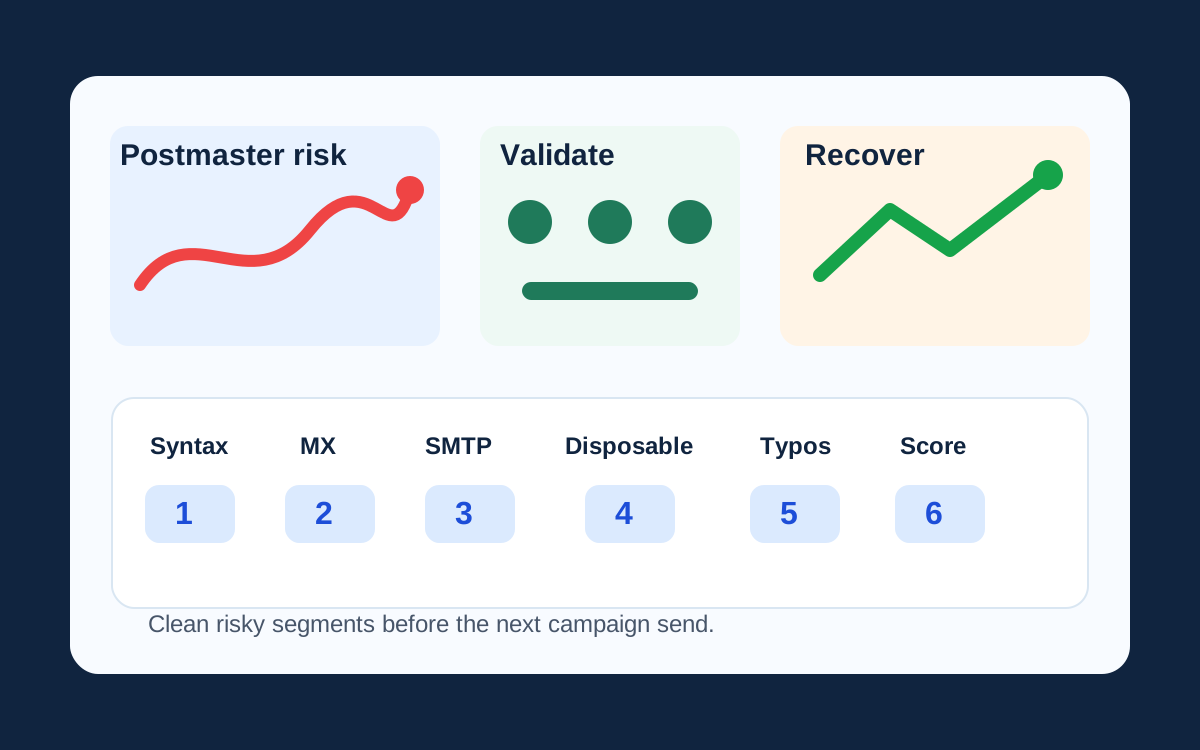
Executive Summary
Gmail spam-rate recovery is a deliverability and data-quality workflow. Authentication gets you past the gate. Clean recipient data keeps you there. Before the next send, validate the risky segment, remove invalid and disposable records, repair typo domains, review low-score contacts, and add real-time checks to every form that feeds the list.
What Is Gmail Spam Rate?
Gmail spam rate is the share of your delivered messages that recipients report as spam in Google Postmaster Tools. It is not the same as bounce rate. Bounces measure addresses that could not receive mail. Spam rate measures recipient rejection. The two are connected because poor list quality often creates both: stale records bounce, uninterested contacts complain, and engagement falls until inbox providers trust the domain less.
Google's sender guidance says to keep spam rates reported in Postmaster Tools below 0.10% and avoid reaching 0.30% or higher. Google also expects RFC 5322 message formatting, one-click unsubscribe for larger senders, valid DNS, and aligned authentication. Microsoft added similar pressure for Outlook, Hotmail, and Live.com senders sending more than 5,000 messages per day, including SPF, DKIM, and DMARC requirements plus regular list hygiene.
Validation will not rescue weak consent, misleading copy, or irrelevant campaigns. It does fix one part of the problem that marketing ops can control quickly: who gets the next message.
How to Reduce Gmail Spam Rate Before the Next Campaign
Start with a freeze. Pause cold segments, old imports, contest leads, purchased lists, role-based addresses, and contacts that have not opened or clicked in a long time. If Gmail is already warning you, sending to the same pool again gives mailbox providers more negative evidence.
Export the risky segment as a CSV and run it through bulk validation. Email-check.app checks the workflow that matters for sender reputation: RFC 5322 syntax, DNS and MX records, SMTP mailbox reachability without sending an email, disposable email detection, typo correction, role-based detection, name extraction, and risk scoring. The goal is not only to find invalid addresses. It is to separate send-ready contacts from records that need suppression, repair, or review.
Syntax
DNS/MX
SMTP
Disposable
Typo
Risk score
Spam-Rate Recovery Actions by Email Signal
| Validation Signal | What It Means | Recovery Action |
|---|---|---|
| No MX record | The domain cannot receive email reliably. | Suppress before sending. |
| SMTP unreachable | The mailbox is rejected or cannot be confirmed. | Suppress or hold for recheck. |
| Disposable domain | The address is tied to a temporary inbox provider. | Block from campaigns and signup forms. |
| Typo suggestion | The address likely has a repairable mistake, such as gmial.com. | Prompt correction or fix after confirmation. |
| Role-based address | The inbox belongs to a team, not a named subscriber. | Review for B2B newsletters; avoid sales sequences. |
| Low risk score | Multiple signals suggest poor deliverability or low trust. | Hold until refreshed consent or stronger engagement exists. |
REST API Example for Campaign Triage
Use the real-time endpoint when a user joins a list, requests a quote, downloads a gated asset, or updates their email. For the existing database, use bulk upload in the product or a CSV workflow that applies the same rules at scale.
curl -G"https://api.email-check.app/v1-get-email-details" \
 -H"accept: application/json" \
 -H"x-api-key: YOUR_API_KEY" \
 --data-urlencode"email=buyer@gmial.com" \
 --data-urlencode"verifyMx=true" \
 --data-urlencode"verifySmtp=true" \
 --data-urlencode"suggestDomain=true" \
 --data-urlencode"detectName=true" \
 --data-urlencode"checkDomainAge=true"
JavaScript Decision Rule
The simplest recovery rule is conservative: repair typos, suppress invalid records, review uncertain records, and send only to addresses with a strong score.
type ValidationSignal = {
 validFormat?: boolean;
 validMx?: boolean;
 validSmtp?: boolean;
 isDisposable?: boolean;
 isRoleBased?: boolean;
 score?: number;
 domainSuggestion?: { suggested?: string | null } | null;
};

type SendDecision ='send' |'suppress' |'repair' |'review';

export function decideCampaignEligibility(signal: ValidationSignal): SendDecision {
 if (!signal.validFormat || signal.domainSuggestion?.suggested) {
 return'repair';
 }

 if (!signal.validMx || signal.isDisposable) {
 return'suppress';
 }

 if (signal.isRoleBased || !signal.validSmtp || (signal.score ?? 0) < 70) {
 return'review';
 }

 return'send';
}
Python CSV Cleanup Example
For a Postmaster-risk segment, write the cleaned output to a send-ready CSV and import only that file into the campaign tool.
import csv
import requests

API_KEY ="YOUR_API_KEY"
SOURCE_FILE ="postmaster-risk-segment.csv"
TARGET_FILE ="send-ready-segment.csv"

def verify(email: str) -> dict:
 response = requests.get(
"https://api.email-check.app/v1-get-email-details",
 headers={"accept":"application/json","x-api-key": API_KEY},
 params={
"email": email,
"verifyMx":"true",
"verifySmtp":"true",
"suggestDomain":"true",
"checkDomainAge":"true",
 },
 timeout=10,
 )
 response.raise_for_status()
 return response.json()

def is_send_ready(result: dict) -> bool:
 if result.get("domainSuggestion"):
 return False
 if result.get("isDisposable") or not result.get("validMx"):
 return False
 return result.get("validSmtp") and result.get("score", 0) >= 70

with open(SOURCE_FILE, newline="") as source, open(TARGET_FILE,"w", newline="") as target:
 reader = csv.DictReader(source)
 writer = csv.DictWriter(target, fieldnames=reader.fieldnames)
 writer.writeheader()

 for row in reader:
 if is_send_ready(verify(row["email"])):
 writer.writerow(row)
Real-Time Validation vs Bulk Cleaning
| Use Case | Real-Time Validation | Bulk Validation |
|---|---|---|
| Signup forms | Best fit. Stop bad addresses before account creation. | Use later to audit old users. |
| Newsletter growth | Catch typos and temporary inboxes at subscription. | Clean inactive or imported subscribers before sends. |
| CRM imports | Useful for one-off enrichment flows. | Best fit for CSV files, event scans, and partner data. |
| Spam-rate recovery | Prevents the same issue from returning. | First step before the next campaign. |
Sender Reputation Is Built from More Than Authentication
SPF, DKIM, and DMARC prove that you are allowed to send as your domain. They do not prove that recipients want the message. Sender reputation is shaped by bounces, spam complaints, engagement, spam trap hits, and consistency. That is why list hygiene belongs beside authentication in every recovery plan.
If a database has a 12% bounce rate, even a strong domain can slide into poor engagement. After validation, teams commonly target under 2% bounce before a marketing send; aggressive recovery programs often hold riskier segments until they can validate closer to 0.3%. The difference is meaningful: fewer bounces, fewer wasted sends, fewer complaint-prone records, and better odds that engaged subscribers see the next message.
For deeper implementation details, read the email validation guide, the SMTP verification guide, and the disposable email detection guide. If the problem is an existing database, the bulk checker can validate multiple CSV files before a campaign import.
FAQ
Can email validation alone fix Gmail spam rate?
No. It lowers data-quality risk, but spam-rate recovery also needs consent review, clearer expectations, segmentation, unsubscribe hygiene, and better engagement targeting.
Should I delete every uncertain email?
Not always. Catch-all and role-based addresses may be valid in B2B. Put them in a review segment instead of mixing them into a recovery send.
When should I add validation to signup forms?
Add it before the next acquisition push. Bulk cleaning fixes the current file; real-time validation protects the next one.